How to Photograph Chrome Nails
Quick answer: Photograph chrome nails in soft, indirect window light with every overhead bulb off, because chrome is a mirror and shows you whatever is around it. Shoot from just above nail height so the light travels across the curve, keep a plain light surface in front of the hand, and never use flash.
Chrome is the finish that looks unbelievable on the desk and dead on the phone. You get one of two photos: a flat grey nail with no shine at all, or a nuclear white streak where the shine should be. Both are the same problem, because chrome does not have a colour, it has a reflection.
Why is chrome so hard to photograph?
Chrome is a mirror, and a mirror has no appearance of its own. A matte nail scatters light in every direction so it looks much the same from anywhere. Chrome reflects in one direction like a tiny curved mirror, so what the camera records depends entirely on what is standing in front of the nail.
You are not lighting the nail, you are lighting the reflection. Point a small hard light at chrome and you photograph a white dot; put a broad soft surface in front of it and you photograph a smooth gradient, which is what the finish looks like to your eye.
It will show you your own face, too. If you can see yourself in the nail then so can the lens, which is why dark clothing turns chrome muddy grey and a cluttered salon behind you turns it into a mess.
What lighting works best for chrome nails?
A big, soft, bright surface in front of and slightly above the hand. In practice that means indirect window light, with the hand turned so the window is what the nails reflect.
Switch the overhead lights off. Warm ceiling bulbs put a yellow cast on silver chrome, and because chrome is reflective that cast lands on the finish itself.
Never use flash on chrome: a small hard source firing along the camera's own axis produces a perfectly placed white blowout in the centre of every nail. Ring lights leave a visible ring, unmissable on chrome. If a ring light is your only option, move it off to one side and diffuse it, or bounce it off a white wall.
Wear a light top. It is the cheapest chrome upgrade there is, because you are the biggest thing those nails are reflecting.
What angle makes chrome look like chrome?
Shoot from just above nail height, not from directly overhead. A top-down shot sends light straight down onto a curved mirror, so the reflection bounces away from the lens and the nail reads flat and grey.
A lower angle lets the reflection travel. Drop the camera toward the fingertips and you catch a gradient running along the curve, dark at one end and bright at the other, and that gradient is what makes chrome read as chrome.
Rotate the hand rather than the phone. Keep the camera where the light is good and turn the wrist a few degrees at a time, because there is usually one angle where the whole set lights up at once. Take five frames across that rotation, since chrome changes dramatically with tiny movements. It is also why shooting both hands in one frame is so awkward on chrome, because the angle that lights one set usually leaves the other flat.
How do you photograph different chrome finishes?
Mirror and silver chrome
The most reflective finish and the least forgiving. Keep the space in front of the hand clean and bright, wear light clothing, and expect to hunt for the angle. A plain white or pale grey background stops the mirror picking up clutter.
Coloured and aura chrome
Easier, because the pigment gives the camera something to hold onto. Still shoot soft and off-axis, but you can afford a slightly darker background here, which helps the colour shift read.
Cat eye
Cat eye needs directional light to show the line at all. The magnetic strip only appears when light crosses it, so a broad window with a clear direction works and completely flat light kills the effect. Turn the hand until the line snaps into place, then hold still.
Velvet and matte chrome
These behave more like normal polish. Soft light still helps, but you are photographing texture rather than a reflection, so overhead light is less punishing.
What background should you use for chrome nails?
Plain, matte and neutral. A white or soft grey towel, plain card, or a light stone surface. Chrome reflects the background, so anything patterned ends up printed on the nail. Product bottles, a colourful desk mat and a window frame with bars all show up in miniature.
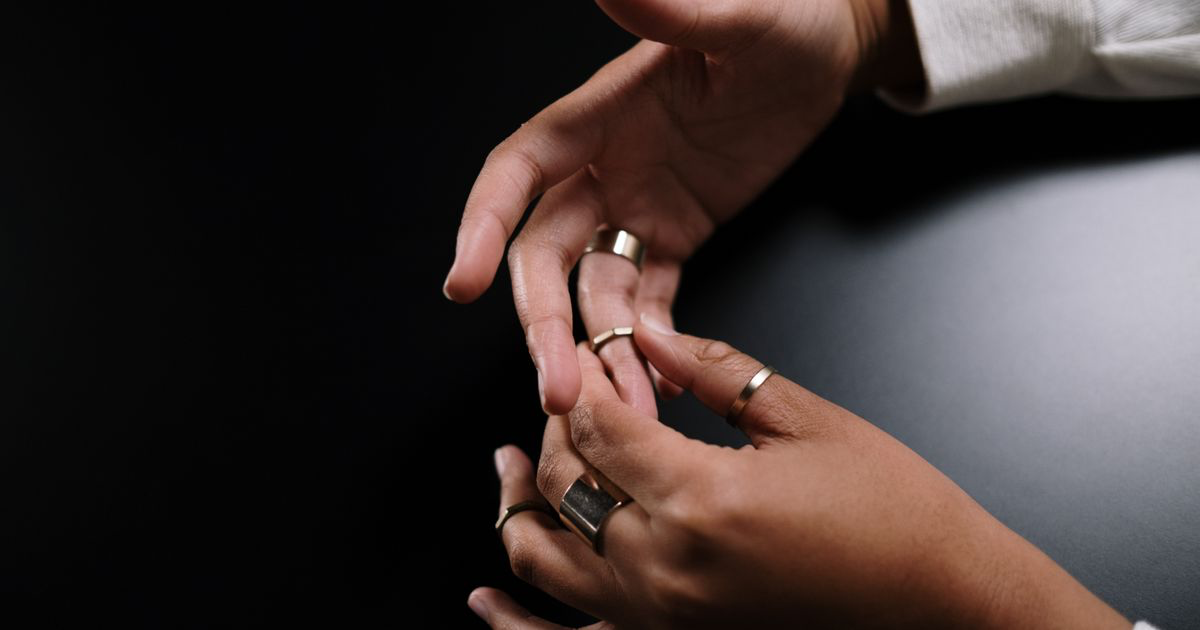
Keep rings off unless they are part of the look, because metal next to metal chrome competes for attention and adds reflections of its own.
Which editing route handles chrome without wrecking it?
| Option | Time per photo | Colour accuracy on chrome | Consistency across your feed | Cost |
|---|---|---|---|---|
| Straight out of the phone camera | 0 seconds | Often flat or grey under salon light | Random | Free |
| Instagram or TikTok filters | 10 seconds | Poor, filters crush the gradient | Low | Free |
| Lightroom or Photoshop | 5 to 15 minutes | Excellent | Good with presets | Subscription |
| NailTech | Under a minute | Built for reflective nail finishes | High | Free to try |
One warning whichever route you take. The instinct is to raise contrast until the shine pops, but that clips the bright end of the gradient into pure white and the finish stops looking metallic. Lift the shadows instead and leave the highlight alone. The rest of the order to work in, and which sliders to leave alone entirely, is in how to edit nail photos.
A two-minute chrome shooting routine
- Switch the overhead lights off and move the hand two to three feet from the window.
- Check what the nails are reflecting: light top on, clean space in front, plain surface underneath.
- Drop the camera to just above nail height at 2x, then tap and hold to lock focus.
- Rotate the wrist slowly until the gradient appears across all five nails at once.
- Take five frames through that rotation, then pick the one where the shine runs along the curve.
Where NailTech fits in
Chrome shot in good light still usually needs a nudge. The silver has picked up a hint of warmth from the room, the skin looks redder than it is, the corner of the towel has a shadow across it.
NailTech is a nail image editor made for those last corrections, on your phone, between clients.
- Neutralise colour casts so silver chrome reads silver instead of beige.
- Even skin tone without flattening the hand.
- Calm oil shine on the sidewalls that competes with the finish.
- Tidy the background so nothing distracting is reflected or framed alongside the set.
NailTech cannot put shine back into a chrome nail photographed flat. That part happens at the window.
A chrome nail records whatever is standing in front of it, which is why a dark top turns silver muddy grey and a bright window two feet away turns the same set metallic.
Make your nail photos look salon-ready
Download NailTech and clean up the lighting, skin tone and background on every set you post, in a few taps.
Download on App StoreFrequently Asked Questions
How do you photograph chrome nails so they look shiny?
Photograph chrome nails in soft, indirect window light with overhead bulbs off, and shoot from just above nail height rather than directly overhead. Chrome behaves like a mirror, so the low angle lets a bright reflection travel along the curve of the nail. Rotate the wrist slowly until that gradient appears across all five nails.
Why do my chrome nails look grey or dull in photos?
Chrome nails look grey in photos when the nail is reflecting something dark, usually your clothing, a dark ceiling, or the phone itself, or when the camera is directly overhead so the reflection bounces away from the lens. Wear a light top, clear the space in front of the hand, and lower the shooting angle.
Should you use flash on chrome nails?
No. Flash is a small, hard light source positioned right beside the lens, so it fires along the camera's line of sight and produces a blown-out white spot in the centre of every chrome nail. Turn flash off and use indirect window light or a diffused lamp bounced off a white wall instead.
What background is best for chrome nails?
A plain, matte, neutral background such as a white or pale grey towel, plain card, or light stone surface is best for chrome nails. Because chrome reflects its surroundings, patterned mats, product bottles and busy salon backgrounds appear in miniature on the nail surface and pull attention away from the finish.
How do you photograph cat eye nails?
Cat eye nails need directional light, because the magnetic line only appears when light crosses the strip. Use window light with a clear direction rather than completely flat, even lighting, and rotate the hand slowly until the line snaps into view on screen. Hold the hand still and take several frames at that exact angle.
Final Takeaways
- Chrome photographs the room, not the polish. Control what is in front of the hand and you control the photo.
- Soft and broad beats bright. Window light gives a gradient; flash and ring lights give dots and rings.
- Never shoot chrome from directly overhead. Drop to just above nail height so the reflection runs along the curve.
- Wear a light top. You are the largest object the nails are reflecting.
- Rotate the wrist, not the phone, and take five frames through the rotation.
- Do not fix dull chrome with contrast. Lift the shadows and leave the highlight alone, or the metal turns to plastic.
Chrome is the hardest case of a general problem, so read the best lighting for nail photos next, and how to photograph nails for angles and posing. If your silver keeps coming out warm, see why your nail photos look yellow.

Hannah
Hannah is a co-founder of NailTech, the nail image editor that turns quick phone shots into portfolio photos. She worked in the beauty industry before moving into mobile design, and now owns product and design on the app.