Should You Use Flash for Nail Photos?
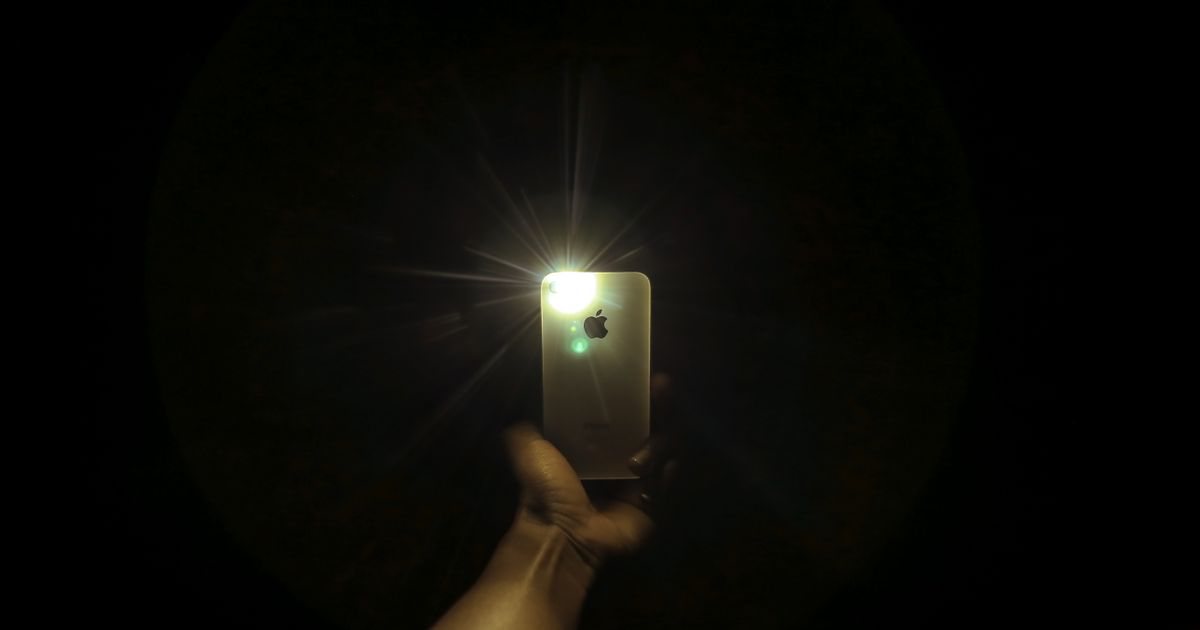
Quick answer: No, keep flash off for nail photos. A phone flash is a tiny, hard light sitting right beside the lens, so it burns a white dot into every glossy nail, flattens the shape of the hand and casts a hard shadow behind the fingers. Bounce the torch off a ceiling or move to a window instead.
The salon is closing, the light has gone, and the set on the desk is the best chrome work you have done all month. The flash icon is right there.
You use it, and the photo comes back looking like a document scan: white dots down the middle of every nail, chalky skin, and a black shadow outlining the hand like a sticker.
Why does flash ruin nail photos?
Because of where it is and how big it is.
A phone flash is a LED a few millimetres across, mounted a centimetre from the lens. That combination causes three separate problems, and glossy nails suffer from all of them at once.
The first is specular reflection. A shiny top coat behaves like a mirror, and a mirror shows whatever is in front of it. A tiny, intensely bright source reflected in a curved nail comes back as a tiny, intensely bright dot with hard edges. The polish colour underneath that dot is gone, and no editor recovers it. This is the same mechanism behind ordinary glare on nail photos, just at maximum intensity.
The second is direction. Light coming from beside the lens travels the same path as your view, so nothing casts a visible shadow towards you. Shadows are what tell an eye that a nail has an apex, that the C-curve is curved, that an almond shape tapers. Remove them and a sculpted set photographs as a flat sticker.
The third is falloff. A small light close to the subject gets dramatically weaker with distance, so the near fingers come out bright and the far fingers come out dim, in the same frame, with a hard black shadow behind them where the flash could not reach.
Does flash change the colour of the polish?
Yes, and this is the problem techs notice second.
A phone flash is roughly daylight-balanced, while a salon at night is lit by warm bulbs. Fire the flash and you have two different colours of light in one photo, which puts the camera in an impossible position: correct for the flash and the background goes orange, correct for the bulbs and the hand goes blue.
Phones try to split the difference, and the split usually lands somewhere unflattering. Skin picks up a grey or greenish cast, deep colours lose saturation, and nudes and mauves shift enough that a client comparing the photo with the shade chart sees two different products.
Chrome and cat eye finishes take the worst of it, because both rely on a light source travelling across the surface to produce the effect. A single hard point of light gives chrome one bright dot and no shimmer, and gives a cat eye a stripe in whatever place the flash happened to sit rather than where the magnet put it.
When is flash for nail photos actually acceptable?
When the photo is a record rather than a portfolio piece.
Reference shots earn a flash. A before photo documenting lifting, a shot of a natural nail for your own notes, a picture you are sending a supplier to ask about a batch: none of these need to be flattering, and a flash at least gives you a readable image in the dark. Nothing there is going on a grid.
A second defensible case is fill in strong backlight, which happens if a client's hand is in front of a bright window and comes out as a silhouette. Even then, a sheet of white card held opposite the window bounces daylight back onto the hand and does the job without any of the flash side effects.
The one place flash is worth arguing about is video, where the phone's flash runs as a continuous torch rather than a burst. That is a different, slightly better light because you can see what it is doing before you commit, and you can bounce it.
What should you use instead of flash?
Anything bigger than the flash and further from the lens.
The best free option is a window, even at dusk. Overcast daylight is soft, large and neutral, which is why it is the default recommendation in best lighting for nail photos.
After dark, the strongest cheap trick is a second phone. Turn on the torch on one phone and point it at a white ceiling or a white wall a metre away, so the light reaching the hand comes off a large white surface rather than a tiny LED. Shoot with the other phone. The reflected light is soft, directional and casts the gentle shadows that make an apex visible.
Failing that, take whatever lamp is nearest, tape baking paper or a white pillowcase over it, and move it off to one side of the hand rather than directly above. Off to the side is doing most of the work: side light rakes across the nail surface and reveals the shape that flat frontal light erases. A dim salon has other problems too, covered in how to take nail photos in a dark salon.
| Light source | Highlight on glossy gel | Shows nail shape | Colour accuracy | Cost |
|---|---|---|---|---|
| Phone flash | Hard white dot, unrecoverable | No, flattens everything | Poor, two light colours mixed | Free |
| Overhead salon bulb | Small hard dot | Barely | Warm cast, correctable | Already there |
| Phone torch bounced off a ceiling | Soft and wide | Yes | Fair, one light colour | Free |
| Indirect window light | Soft, elongated, flattering | Yes | Good | Free |
The pattern worth noticing is that the free options beat the flash on every column except availability at midnight, and even then the bounced torch is free too.
All of them leave you with a dim, warm file rather than a finished photo, which is the trade worth making. A dim frame brightens; a flash-blown top coat does not. How to edit nail photos covers bringing that dim frame back up without the shadows breaking into noise.
A two-minute plan for shooting after dark
- Turn the flash to Off, not Auto, because Auto will fire the moment the room dims and you will not notice until later.
- Find the nearest white ceiling or wall and aim a second phone's torch at it, about a metre from the hand.
- Put the light to one side so a shadow falls across the nail and the apex reads.
- Press and hold to lock exposure on the middle nail, then drag brightness down a notch to protect the top coat shine.
- Brace your elbows on the desk and take five frames, since low light means a slower shutter and one of the five will be the sharp one.
Where NailTech fits in
The reason flash is so hard to undo is that it destroys information rather than shifting it. A colour cast is a shift, and shifts reverse. A white dot burned into the middle of a nail is an absence, and there is nothing underneath it to bring back. Bouncing a torch off a ceiling instead leaves you with a file that is dim and slightly noisy, which are both problems with solutions.
That is the trade worth making at nine in the evening: accept an underlit file over a damaged one, then fix the underlit part.
NailTech is a nail image editor built for files shot in bad rooms.
- Brighten a dim, bounced-torch shot without the skin going grey.
- Correct the warm cast that a bulb or a torch leaves on both nail and hand.
- Reduce the speckle that low light introduces, without erasing the sparkle in a glitter gel.
- Tidy the background that a single side light left half in shadow.
NailTech is a phone editor for nail photos. Nothing in it rebuilds a nail plate that recorded as pure white, which is the whole case for leaving the flash off in the first place.
A phone flash sits a centimetre from the lens, which is why it erases every shadow that tells a client the nail has an apex, and why a sculpted almond set photographs like a flat sticker.
Make your nail photos look salon-ready
Download NailTech and clean up the lighting, skin tone and background on every set you post, in a few taps.
Download on App StoreFrequently Asked Questions
Should you use flash for nail photos?
Flash should stay off for nail photos. The phone flash is a tiny hard light beside the lens, so it burns a white dot into every glossy top coat, removes the shadows that show nail shape, and mixes daylight-coloured light with warm salon bulbs so the polish colour shifts.
How do you take nail photos at night without flash?
Take nail photos at night by bouncing a second phone's torch off a white ceiling or wall about a metre away, placing that light to one side of the hand rather than overhead. Lock exposure on the middle nail, brace your elbows on the desk, and shoot several frames.
Why do my nails look white in flash photos?
Nails look white in flash photos because a glossy top coat mirrors the flash, and a small intensely bright source reflects back as a hard white dot. The camera records that patch as pure white with no polish colour inside it, which no editing app can recover afterwards.
Does flash affect nail polish colour in photos?
Flash affects nail polish colour because the flash is roughly daylight-balanced while salon bulbs are warm, so two different colours of light land in one photo. The camera cannot correct both, and the compromise usually leaves skin grey and nudes, mauves and chromes noticeably shifted from the real shade.
Is the phone torch better than the flash for nail photos?
The phone torch is better than the flash for nail photos because it runs continuously, so you can see the effect before shooting and can bounce it off a wall or ceiling. Bouncing turns a tiny hard source into a large soft one, which produces a gentle highlight instead of a burned white dot.
Final Takeaways
- Set flash to Off rather than Auto, or it will fire at dusk without warning.
- Bounce a torch off a white ceiling when the daylight has gone.
- Put the light to one side so the apex and the C-curve cast a shadow.
- Keep reference and before shots separate from portfolio work, where a flash is fine.
- Underexposed beats blown out. Dim files recover, white patches do not.
- Watch chrome and cat eye especially, since both need light travelling across the surface.

Hannah
Hannah is a co-founder of NailTech, the nail image editor that turns quick phone shots into portfolio photos. She worked in the beauty industry before moving into mobile design, and now owns product and design on the app.